Three schools in Brazil were awarded for making a difference with social transformation projects involving students and the community: SESI Barbacena school, from Minas Gerais; Colégio Magister, from São Paulo; and Escola Classe 40 from Ceilândia, DF, winners of the 2021 Education for Kindness and Generosity Award for Schools.
In its 2nd edition, the Award aims to value projects that are connected to the 7 principles of Education for Kindness, Generosity, Solidarity, Sustainability, Diversity, Respect and Citizenship, generating integration between teachers, students, families and communities where the schools are located. By recognizing best practices, teachers and students become examples of engagement for the whole society, creating more collaborative habits and rituals, a fundamental requirement for the leaders of tomorrow.
The registration platform received 3205 visits, and of the total registered schools, 60% were public schools. Regarding the profile of those who registered, 70% were women, and 42.5% were between 25 and 44 years old. The most frequent themes were social awareness projects on the importance of one or more of the 7 Principles of Education for Kindness and Generosity (56%); projects to collect food, school supplies, electronics, clothing, blankets, and other durable and non-durable goods (37.5%); volunteer projects (3.1%); and projects promoting dates on the seasonal social calendar such as Giving Tuesday/Giving Tuesday Kids, Environment Day, Gratitude Day, Black Consciousness Day, among others (3.1%). 100% of the registered schools have a habit of carrying out donation campaigns.
According to Marina Pechlivanis, creator of the gentilidadegenerosidade.org.br , the quality of the projects was surprising: “we had a 50% increase in the total number of registrations, compared to 2020, and also an increase in the quality and diversity of the proposals, all connected by the same desire to, through education, transform for the better the interdependent relationships between people and the environment in which they live.”
According to educator Êda Luiz, one of the award's judges, "the importance lies in giving visibility to initiatives that break with the complacency of an approach focused solely on the transmission of knowledge and are building a new, more holistic reality, bringing life to their minds, spirits, hearts, and hands. Projects like these, presented through awareness-raising and peace-oriented education, which involve caring for others and for everyone, transform the violence of the current reality and make me see a pluralistic Brazil, aware of its responsibility to educate children and adolescents who are safer, more conscious, and kinder to all forms of life on the planet through individual and collective decisions and actions."
Winning schools:
1st Place: SESI Barbacena/MG — Project: SESI Network of Virtues:
"The Network of Virtues Project has been implemented from early childhood education to high school, aiming to meet a social demand for more ethical citizens who can be agents of transformation towards a culture of peace and well-being. The work develops awareness and reflection within the school community—students, families, and the school—on issues permeating our society through the lens of moral values, aiming to positively change our reality, as well as strengthen and renew "values," incorporating virtues into the educational process that enable the holistic development of our students. Law 13.185, of November 6, 2015, establishes a program to combat systematic intimidation (bullying), prioritizing prevention mechanisms that promote effective accountability and change in hostile behavior; in this sense, the work with the SESI Network of Virtues addresses this need expressed in the law. School education is not limited to the mere transmission of knowledge; educating through virtues leads students to develop and understand their rights and duties, seeking healthy coexistence with others." colleagues, with the school, with the family and society in general.”
2nd Place – Colégio Magister/ São Paulo — Project: Playing and Learning in the Digital Environment
“The school already has the new high school curriculum implemented, and one of its elective subjects is Social Entrepreneurship. Participating students develop programs, projects, and initiatives with partner institutions and organizations. With the pandemic and the difficulty of in-person volunteer work, this initiative encouraged students to meet with children assisted by the Probrasil Association in Parelheiros, more specifically at the Nelson Mandela Center for Children and Adolescents. With the support of teachers, the students prepared a quiz on the Kahoot platform and administered the game, while the children from the CCA were trained to promote virtual learning games with young people from the community at the telecenter that serves the Jardim dos Álamos neighborhood.”
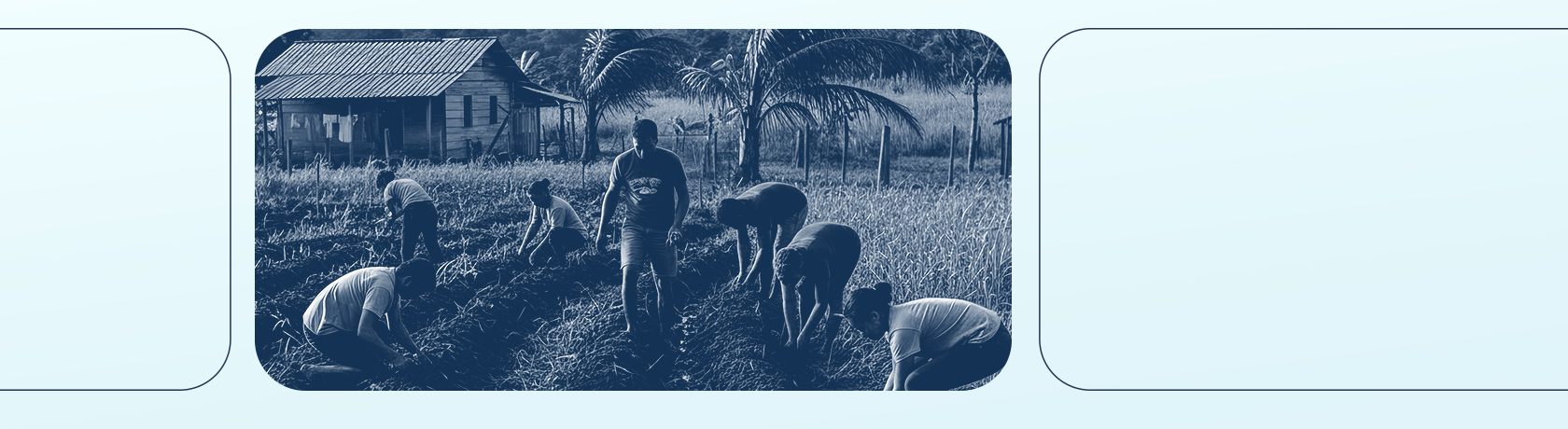
3rd Place: Escola Classe 40 de Ceilândia/DF — Project: (Sol Nascente Food Security)
"The school is located in one of the largest favelas in Brazil, in the city of Sol Nascente Pôr do Sol, DF. As is characteristic of cities that develop without state assistance, the community faces many problems. Violence, poor sanitation, precarious housing, and hunger are the main issues faced by families. Because the school is in the community, it is involved in actions that promote the well-being of our children and community, developing awareness and fundraising campaigns for emerging situations. We partnered with the Association of Brazilian Diplomats, which financed the project, and the social assistance support network of the public system, which held a training session with the families. We had representatives from the guardianship council, CRAS (Social Assistance Reference Center), the Health Department, and Social Works. The school is a space for promoting citizenship. Citizenship that transcends the school walls and needs to be connected to the demands of the communities from which our students come. Where violence, fear, and hunger prevail, we are trying to alleviate suffering." "These families and practice empathy."
About the jurors:
Êda Luiz, an educator with 55 years of experience in public schools, is a pedagogue specializing in adult education. For 22 years, she managed CIEJA CL, a school recognized as "transformative." Now retired, she continues to do what she loves most in social projects: sharing knowledge.
Maria Cecília Lins, founder and executive director of Instituto Pró-Saber SP, in the Paraisópolis community since 2003. A primary school teacher, she holds a degree in Psychology and is a doctoral candidate in Educational Psychology at PUC SP. She has specialized in Executive Education for Leaders of Civil Society Organizations at Stanford and in the Science for Childhood program at Insper in partnership with Harvard. She is an advisor to Instituto Protea, Think Twice Brasil, Voa/Ambev, and IABCD, and director of the Grupo Mulheres do Brasil. Her dream is to contribute to ending inequality through education.
Patricia Kunrath holds a degree in Social Communication – Advertising and Public Relations, a Master's degree and a PhD in Social Anthropology from UFRGS, with a doctoral internship at the University of California, Irvine. She has experience in academic teaching, acting and researching in the third sector, focusing on philanthropy, private social investment, and the culture of giving in Brazil and the United States. She is a professor at ESPM Porto Alegre and knowledge coordinator at GIFE.
Pedro Frazão is a father, kidney transplant recipient, cyclist, and activist for causes related to urban realities such as mobility, social inclusion, recycling, and the culture of giving. He promotes the Culture of Giving using the city as his main platform and transforming realities through information and art in his project "Quem doa vive mais" (Those who give live longer). He is part of the Advisory Board of the NGO Pimp My Carroça. He holds degrees in Design (Panamericana School of Art), Advertising (FAAP), a postgraduate degree in Marketing (FAAP), and a technical degree in graphic production (SENAI), in addition to courses and workshops in analog and digital processes and new audiovisual production techniques.
On Education for Kindness and Generosity
The first Brazilian platform for Education for Kindness and Generosity offers systemic solutions for diverse audiences. For schools, a methodology with 26 lesson plans adapted from the renowned Learning to Give and aligned with the new BNCC (Brazilian National Curriculum Base), in addition to courses and awards. For families, practical lessons with videos, readings, and activities. For young social leaders, events and opportunities for connection and visibility. For society, groundbreaking studies and research with children and young people. For companies, human development dynamics for training programs. All free, uncomplicated, welcoming, and accessible, and based on the seven principles of Education for Kindness, Generosity, Sustainability, Solidarity, Diversity, Respect, and Citizenship (7PEGG). Among the supporting partners are the Mol Institute and the Bem Maior Movement.


 ">
">