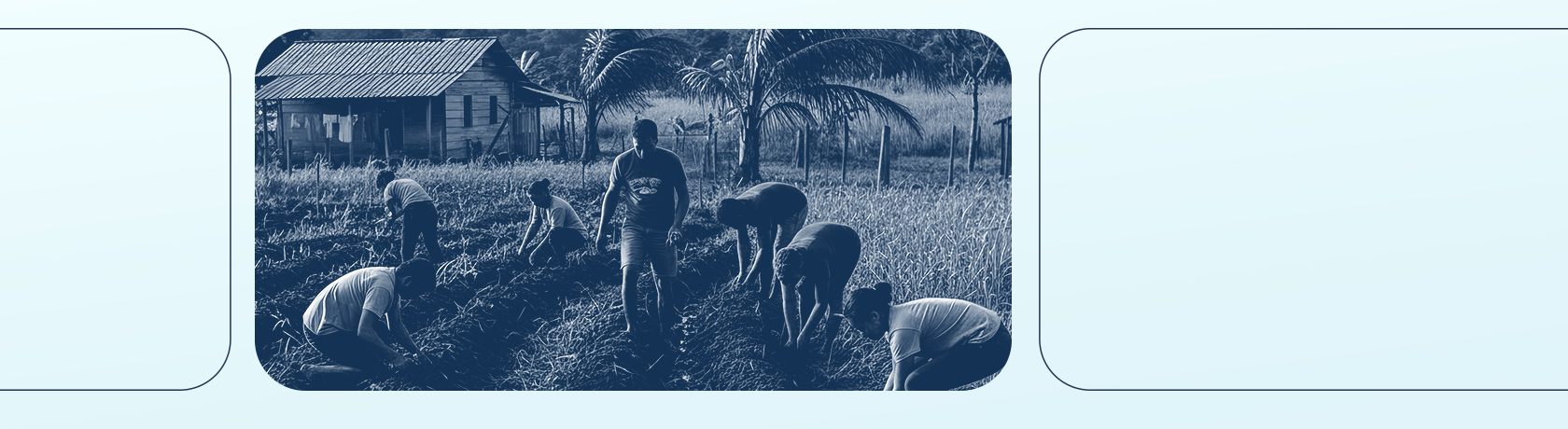
Their power lies in their creativity, and their most valuable tool is the sewing machine.
How can a fashion designer contribute to the development of their community while also bringing hope to vulnerable people? To provide others with access to dignified work, Ronaldo Silvestre, a fashion designer – who, according to him, acts as a social designer – used his creative talent to offer a better quality of life to women, young people, and mothers in his hometown of Itabira (MG), through the solidarity economy and entrepreneurship.
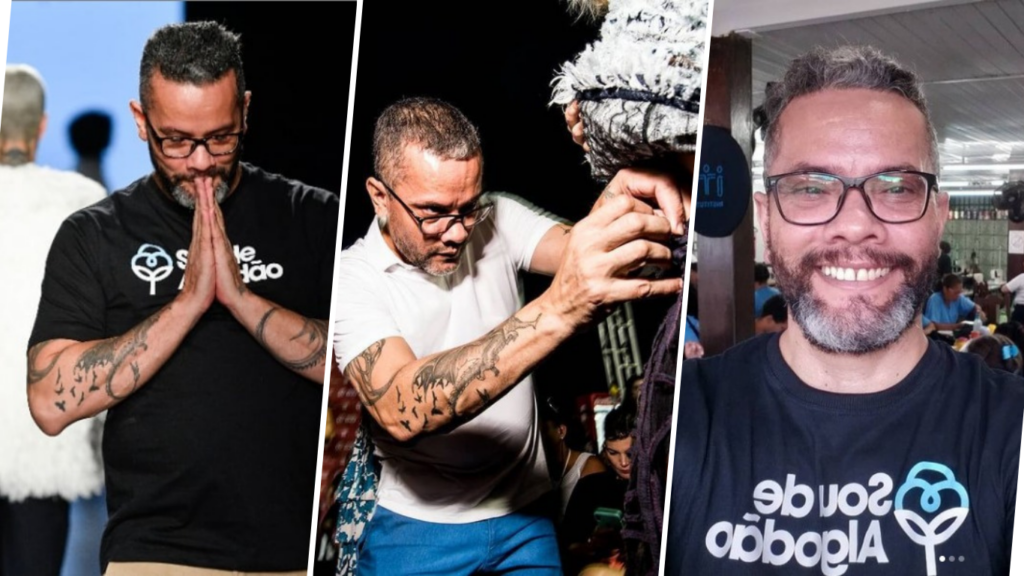
Ronaldo Silvestre is a community leader, founder and President of the ITI Institute – Equality, Transformation & Social Innovation, founded in 2009. The NGO works in professional training, income generation, entrepreneurship and gender equality. Photos/reproduction
To understand Ronaldo's story, we need to remember one of the separatist movements in Brazilian history, known as the Tailors' Revolt. In 1798, inspired by the ideals of the French Revolution – Equality, Liberty, and Fraternity – the Bahian Conspiracy took place, a separatist movement that aimed to abolish slavery and address the demands of the poorest segments of the population. This historical context linked to clothing is the starting point of the conversation with Ronaldo Silvestre, who masterfully explained the role of clothing, ranging from protecting the body to dividing shells. And, far beyond that, "it is the weapon we have for the great revolutions of the world," says Ronaldo.
If back then the great popular struggle was for independence from the Portuguese crown, today many women in Brazil continue to fight for their financial independence, to give themselves and their children a more dignified life. And it is in this history that Ronaldo effectively participates, contributing to the transformation of many lives.
So, who exactly is Ronaldo Silvestre?
The answer came immediately: "A dreamer!" For him, his story reflects that of his mother, who always taught him to have faith, hope, and never stop believing.
The son of Eurídice Martins da Silva, a woman who had a difficult life, earned her living washing clothes and selling pastries on the streets of the small town in Minas Gerais. Often, she would trade her work for used clothes and school supplies, also used, to give to her children. When she managed to buy her first sewing machine, her family's life became more prosperous.
From a young age, Ronaldo showed his creative talent at school, where he excelled in drawing and art classes. Only later, when he was already working in industrial design at a multinational company, did he decide to pursue his dream of studying fashion at a university.
But the guiding thread of his journey came with ecodesign, a proposal for more sustainable fashion design. From this movement, Silvestre produced a great deal and won several national awards in the ecological fashion category. For eight years of his career, he dedicated himself to social projects with Sebrae, providing technical consulting to seamstresses from rural workers' cooperatives in various parts of the country. And he never stopped focusing his attention and energy on social work.
"Respecting our origins to build the transformation we so desire"
After spending a large part of his life in the southern region of Brazil, Ronaldo decided to return to Itabira, this time with a mission: to propose a social transformation. "I understood that if I want to propose a transformation, it needs to start in my origins." The reality Ronaldo found in Itabira upon his return was shocking, he recounts. Friends who studied with him in school were already grandmothers at 40 years old, many of them became mothers in their teens.
These women led lives marked by both financial and psychological difficulties, factors that hindered their professional and personal development. Upon learning of this reality and realizing she possessed all the necessary tools to plant the seed of the transformation she so desired, she founded the ITI Institute.
However, NGO managers don't live on dreams alone. It involves a lot of volunteer work and, unfortunately, no matter how tirelessly you work, you may still hear harsh criticism and doubts about you. Ronaldo recounts that his social development project was misinterpreted. Local politicians and businesspeople questioned his true intentions. "Being resilient and overcoming prejudice" within his own city was one of the biggest challenges he faced in moving the project forward.
And if it weren't for her network of contacts and the knowledge she acquired throughout her career as a stylist, it wouldn't have been possible to develop her social project. "Being a social organizer means understanding the possibilities you have and how you can contribute to making things happen," she says.
Despite the "no's" and all the difficulties along its journey, it was through resourcefulness that it managed to move forward. Today, the ITI Institute is a source of inspiration for other NGOs and individuals to strengthen and develop themselves.
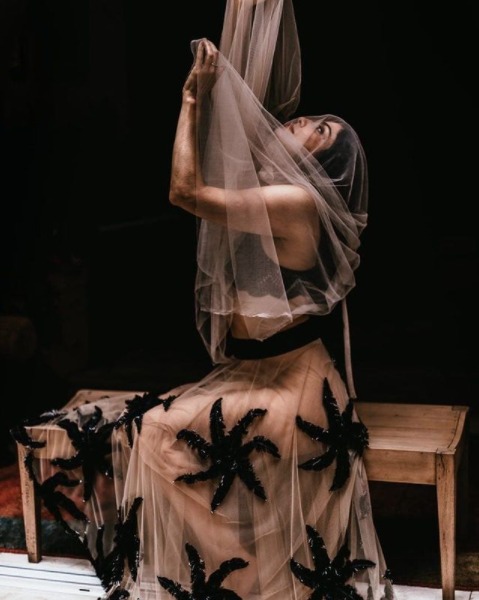
In the photo, actress Letícia Sabatella wears ARTWEAR – Ronaldo Silvestre. The skirt is made of tulle embroidered with textile waste from denim by Capricórnio Têxtil. The textile redesign was produced by the women of the ITI Institute. Photo reproduction/ Credits: @nakaoamanda
"When we help others, we learn and are happy with their achievements."
For Ronaldo, the measurable results of his work, to date, are the improved quality of life for mothers and children, who, through the sewing course at the ITI Institute, are able to have a source of income to support their families and even pay for college.
“The measurable result is seeing a mother over 40, with 3 or 4 children, concerned about going to college to improve her life. And fighting to ensure that her daughter doesn't follow the same path she did, or get pregnant as a teenager.” Witnessing several women with similar stories, breaking cycles, is what makes Ronaldo increasingly believe in the transformative power of a sewing machine.
With this desire to make new futures possible for other people, he follows his dreams, transforming them into realities. And he leaves a message, especially for people who work in the third sector and are at the forefront of NGOs: “May we never stop believing and being persistent, having a worldview that inspires us to work in NGOs. Think that you can help other people and other NGOs with your work, and that you are fulfilling your role in the world. It is a joint construction and in the end, we all fight for the same cause,” he concludes.



 ">
">