Solving a problem requires, first and foremost, a broad view of the global scenario. We are living through a period of transition; we are overcoming the worst moments of the pandemic and the peak of the crisis, but we still face significant challenges in addressing social, climate, health, and trust-related issues.
We must take responsibility for recognizing the intersectionality of the issues that encompass these sectors. We cannot ignore the overall context and focus solely on specific problems. Philanthropic engagement should not be merely charitable or technical. The situation demands that we bear in mind that we were already experiencing an emergency in the country, with structural difficulties and unparalleled social inequality. The pandemic has led to an unprecedented emergency.
In this context, reviewing the role of philanthropy to amplify its reach is our great challenge, enabling the creation of systemic and sustainable changes. The process includes an analysis of the powers we have as actors in the sector and how to use them, as well as initiatives that generate effective results, with new solutions, methodologies, and tools.
For systemic transformations, we must change the way we operate, working more collaboratively, and adopting methods such as advocacy and research. As philanthropic actors, we will prioritize consistency and coherence, with transparency, power distribution, resource governance, and analysis of socio-environmental effects to evaluate the social outcome promoted. These approaches are fundamental to making philanthropy an engine of greater transformation that is not limited to specific resolutions, but has a vision of the ecosystem as a whole.
Brazil is rich in innovations in this area, with online donation platforms, young social entrepreneurs who bring new ideas, initiatives that allow us to work with what we have in the country, in addition to incorporating examples from around the world. The predominant current international philanthropic models are the American and Anglo-Saxon ones, which leads us to replicate actions from these models.
Using good examples is fundamental; however, it is increasingly necessary to build alternatives adapted to the local culture, with national and international articulation and connections, both public and private. This demand has become even more urgent with Covid-19, which demonstrated how all local problems are global and will lead us to seek a balance between these two poles. Therefore, concrete collaboration involves building common vocabularies and objectives to utilize international experiences and, at the same time, replicate and scale local models.
For these measures to work, it is essential, first and foremost, to evolve the way philanthropy is done, starting by facing the fear of risks and accepting that failures can also be helpful. Seeking new partnerships is also part of the risk.
There are many factors at stake in strengthening philanthropy and enabling it to go beyond simply measuring the increase in donations, allowing for an assessment of the impact on the territory, the municipality, the state, and even the country, promoting a medium- and long-term social transformation.
With this attitude, we will arrive at the new model we seek, developed within a civil society that is attentive and alert to social problems. This reformulation requires a new cultural construction. We will not achieve this result without a profound transformation of society.
Let's strengthen a philanthropy of consensus, with a shared agenda for coordinated action, guided by the common good. An inclusive tool that, through social investment, enables the development of a less unequal community, where hunger is combated in this time of crisis and where we can look at future structural problems, which will become even greater in the post-pandemic era.
Brazilian philanthropy needs to invest more in structuring the ecosystem to guarantee a foundation that allows for scaling collective impact. It is up to organized civil society to support the construction of economic and societal models that create an environment conducive to collective social development. Our mission is to envision a better, more inclusive Brazil, where philanthropy can be an integral part of building the country.
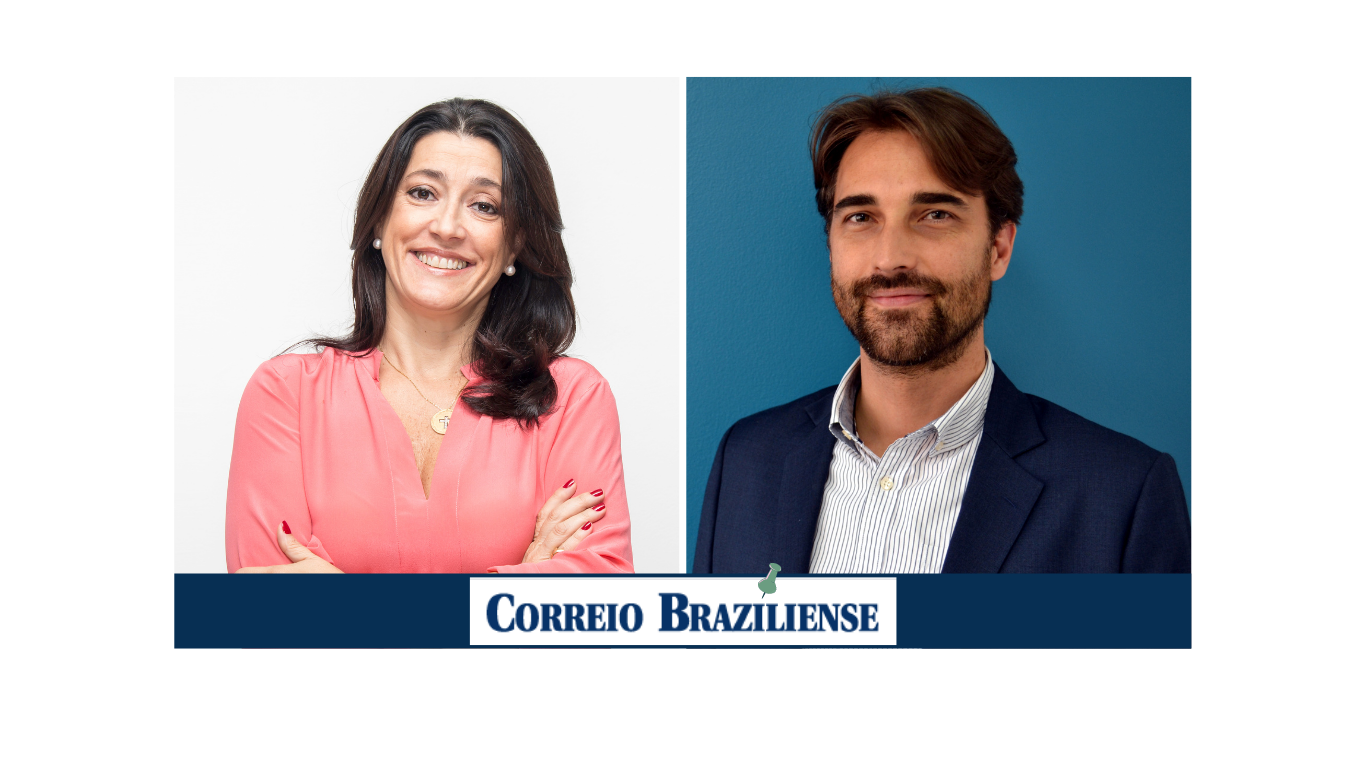
By: Benjamin Bellegy – Executive Director of WINGS, an international network promoting philanthropy, and Carola Matarazzo – Executive Director of the Bem Maior Movement.
This article was originally published in Correio Braziliense .



 ">
">