What the GIFE Congress made us reflect on regarding the decentralization of power, knowledge, and wealth
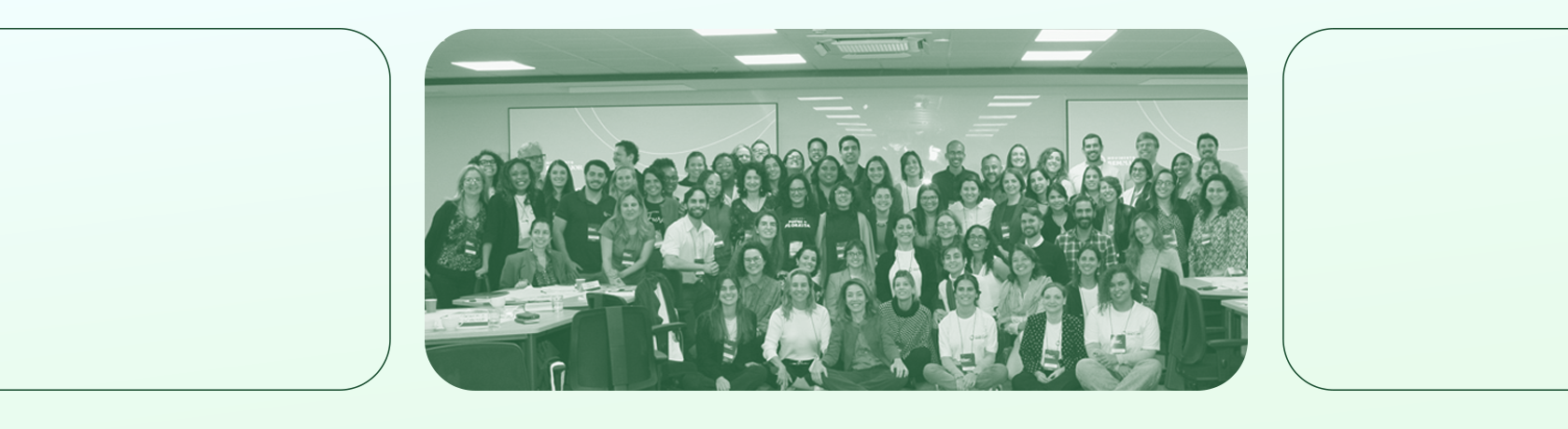
What does it mean to decentralize power, knowledge, and wealth in a country marked by historical inequalities? This was the provocative question that ran through the 13th GIFE Congress, held in Fortaleza from April 7th to 9th. A call that filled the stages, circulated through the corridors, and permeated listening and exchanges between different territories, experiences, and voices.
The Bem Maior Movement was present at the meeting and felt the power of this questioning. Below, we have organized the main reflections we brought with us — grouped into the three pillars that structured the event's theme.
Decentralizing POWER: who speaks, who represents, who decides?
The question is uncomfortable, but fundamental to address: who decides what is relevant? In a field permeated by asymmetrical relationships between those who give and those who receive, this is a point of tension that needs to be confronted.
In the opening plenary session, Átila Roque, director of the Ford Foundation in Brazil, reinforced the fundamental democratic dimension of philanthropy and the urgency of revisiting the 1988 social pact to reactivate its foundations in times of fragility of basic rights.
Along the same lines, Giovanni Harvey, executive director of the Baobá Fund, warned against what he called "recreational philanthropy": actions that respond more to the emotional needs of the donor than to the realities of those living through social challenges. This serves as a warning that private social investment should not be limited to logics of reciprocity, but must seriously confront its contradictions.
And there's another important layer: who has the power to define the image that is constructed about the other? To authorize narratives? These questions also emerged in debates about communication and active listening. Decentralizing power, after all, means opening real space for shared decisions, inviting people to the stage and sharing the microphone.
Decentralizing KNOWLEDGE: listening as a learning practice
The diversity at the congress — from community leaders to representatives of large institutes, from communicators from marginalized communities to indigenous intellectuals — made it clear that knowledge is plural by definition.
Professor Gersem Baniwa reminded us that knowledge, for many Indigenous peoples, is neither individual nor exclusively human—it belongs to the territory, to ancestry, to nature. In this sense, decentralizing knowledge means recognizing that there is no hierarchy among forms of knowledge and that each territory carries knowledge that cannot be contained in reports or ready-made models.
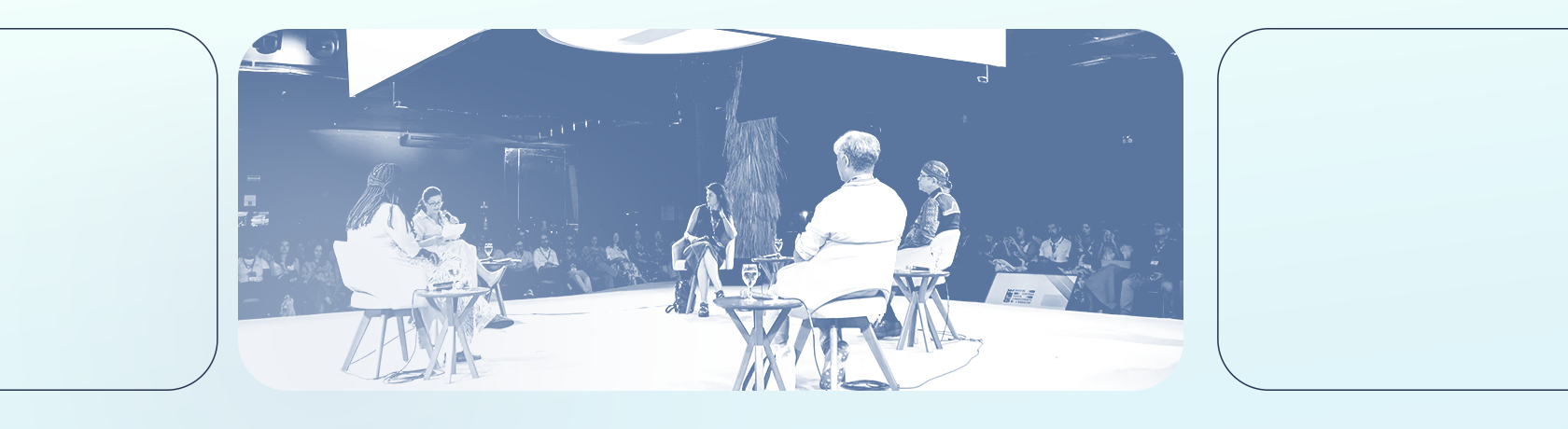
This perspective was central to the plenary session moderated by Carola Matarazzo, executive director of MBM, on listening to the territory as a vector for social transformation. The dialogue connected different areas of expertise by bringing together Mariana Neubern (Tide Setubal Foundation), Joaquim Melo (Banco Palmas), Kaká Werá (Tapuia indigenous educator), and Benilda Brito (Nzinga – Black Women's Collective), and showed how listening can be a method of action and learning. With empathy, balance, and responsibility, it is possible to co-create paths with the territories, and not for them.
The discussions reinforced a central question: who is recognized as the holder of knowledge? In a country where peripheral voices still defend their legitimacy, philanthropy needs to commit to the real decentralization of the production and circulation of knowledge.
Decentralize WEALTH: let go, redistribute, repair
The opening speech by American philanthropist Abigail Disney was one of the most forceful at the congress. A proponent of taxing large fortunes, she stated that "taxation is redistribution and social justice" and, in an interview with Folha de S.Paulo, provocatively declared: "we need to stop idolizing the rich.".
For her, decentralizing wealth requires relinquishing power. And here lies one of the most sensitive points of philanthropy: it is sustained precisely by structures that, in some way, have benefited from concentration. How can this contradiction be honestly addressed?
Therefore, decentralizing wealth is not about funding projects or one-off donations. It's about redistributing resources in a structured way, with listening, intentionality, and a commitment to social justice. It involves recognizing privileges, reviewing decision-making models, and adopting bold stances.
As heard in the corridors of the event center: it's time to go beyond philanthropy that "puts water in the ocean." We need to support strategies that address the structural causes of inequality—with a systemic vision and coordinated action.
The GIFE Congress challenged us, took us out of our comfort zone, and brought us back to work with sharper questions. How do we continue to decentralize? How do we ensure that listening, power, and resources go hand in hand? We returned with the certainty that transformation only happens when there is real sharing—of decisions, knowledge, visions, and paths.



 ">
">