A social impact coalition, Redes Ceará brings together different sectors to strengthen productive inclusion and food security in the territories of Fortaleza and Maracanaú.
“Territory isn’t just where we are, but also who builds it with us.”
— Natália Tatanka, CEO of Giardino Buffet and Grill
This phrase sums up the spirit of Redes Ceará.
When Natália speaks of territory, she expands the definition of a fixed place on a map. She is talking about people, the individuals, organizations, and institutions that come together, day after day, to make this territory exist and remain standing.
It is from this understanding that Redes Ceará was born. A social impact coalition that unites entrepreneurs, social organizations, and public authorities to invest in collective intelligence and jointly address the challenges of productive inclusion and food security in communities in Fortaleza and Maracanaú.
What is Redes Ceará?
In practice, this coalition translates into a shared governance structure between local philanthropists, investors, and technical partners, operating with deliberative and funding councils and thematic committees, thus supporting a portfolio of organizations already active in these territories. The initial investment totals R$ 2.5 million, with the goal of mobilizing R$ 5 million in two years and initially benefiting approximately 1,300 people.
Redes Ceará is a strategy of local empowerment, both on the part of those who finance it and those who implement it. The territories of Ceará already know the solutions to their own challenges, and there are also local funders who believe in and trust this work.
The concept behind the coalition
If there is a thread that connects everything that Redes Ceará does, it is the concept of territory as the space where people, organizations, and institutions come together to face common challenges.
That's why Redes Ceará was born as a coalition. Each partner contributes their own strength, sharing expertise and reducing project risks. One side brings resources, another brings methodology, another brings connections with public authorities, and another brings decades of experience working on the ground. Natalia's statement, which opens this text, also summarizes this rationale. The territory is built collectively, link by link.
Grande Bom Jardim: territory in practice
The concept of territory may seem abstract, but Grande Bom Jardim makes it concrete. It is there, in one of the largest neighborhood complexes in Fortaleza, that three of the five anchor organizations of Redes Ceará operate: the Bom Jardim Cultural Center (CCBJ), the Mental Health Movement, with Giardino Buffet and Grill as its social business arm, and the DLIS Network.
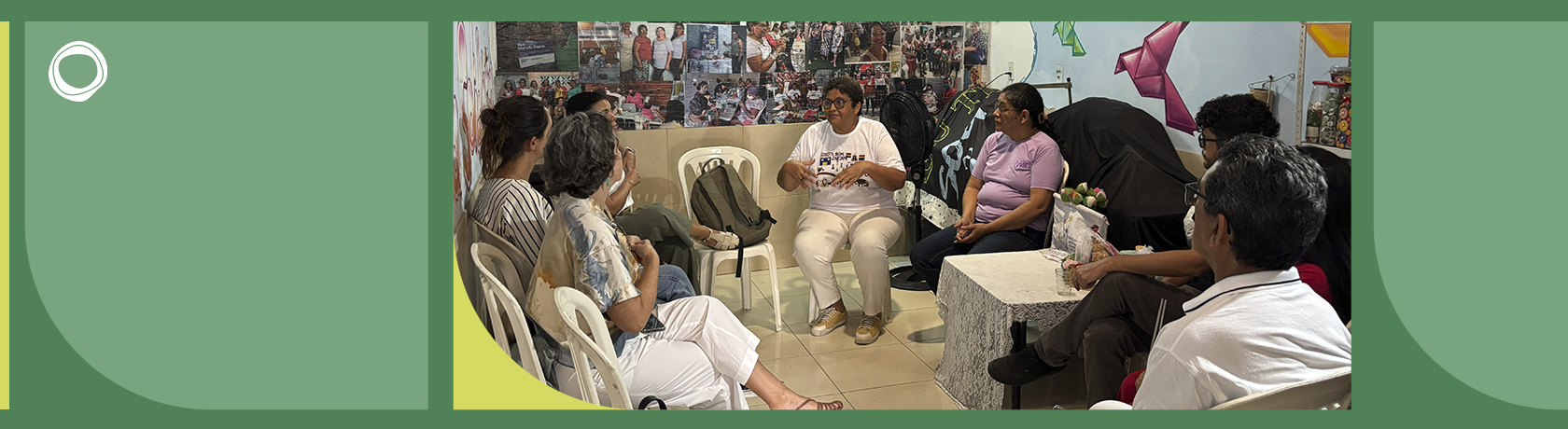
A few weeks ago, I had the opportunity to visit the area, along with Beatriz Waclawek, Social Investment Manager of the Bem Maior Movement, and Fernanda Cotta, manager of the Localiza Institute. We went to the CCBJ (Centro Cultural Brasileiro de Juazeiro) and met the Coletivo de Mulheres Construindo Sonhos (Women's Collective Building Dreams), linked to the Center. We also went to Buffet Giardino and saw firsthand the work of the Mental Health Movement. We concluded at the DLIS Network, with a visit to Criart.
What was most striking was seeing how these organizations already communicate with each other within their own territory, long before any coalition came along to add to them. As Marcos Levi Nunes, superintendent of the Grande Bom Jardim Cultural Center (CCBJ), summarized:
"There is great joy in finding these partners to discuss food security, the creative economy, productive inclusion, and human rights as a whole for territories that have been historically marginalized."
CCBJ promotes training, creation, and cultural leadership in the territory. Within Redes Ceará, its project focuses on strengthening community initiatives, such as the collective we visited.
Also in Grande Bom Jardim, the Mental Health Movement works with community care and productive inclusion, with a focus on Giardino Buffet, its social business arm; the project that the coalition supports there is the incubation of social businesses in gastronomy.
The DLIS Network (Integrated and Sustainable Local Development Network of Greater Bom Jardim) brings together organizations and leaders in defense of rights and local development, focusing on the training and strengthening of productive groups.
The connection to food security
The other two anchor organizations of Redes Ceará expand the map beyond the Greater Bom Jardim area and reinforce a second strategic axis of the coalition: food security.
In the Grande Mucuripe area, the Ivens Dias Branco School of Social Gastronomy values food culture and expands professional opportunities through social gastronomy, training and incubating entrepreneurs in the sector. As Vanessa Moreira, coordinator of Food Culture and Research at the school, explains:
"The work we do in training and research, focusing on food culture, sustainability, and social gastronomy, gains strength when we realize that, in addition to training and research, we can provide individual consulting services to people who want to start their own businesses."
In Maracanaú, the Pact Against Hunger connects with initiatives working with CEASA, including the CEASA Zero Waste program and the Food Bank.
Together, the projects of the five anchor organizations outline three strategic axes of the coalition: productive inclusion, food insecurity, and territorial development. The audience that these fronts prioritize also says a lot about Redes Ceará. Women heads of household, young people in vulnerable situations, families with chronic food insecurity, peripheral groups organized in collectives, and small rural producers are the main focus areas.
The work begins
The Redes Ceará project is progressing in stages, from diagnosis to execution. The mapping of the territory and the anchor organizations, along with the selection of projects, are complete, and the actual execution has already begun to be designed.
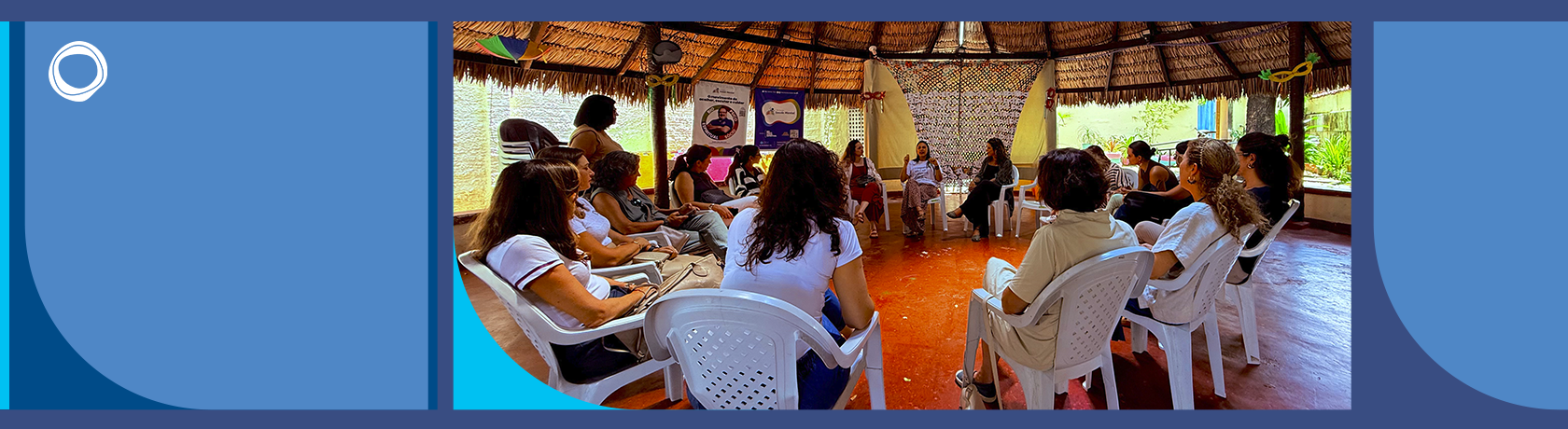
At the end of August, in Fortaleza, we brought together strategic partners, co-investors, and the five anchor organizations to take the first practical steps of the coalition. Each organization presented its story and project to those present, and, based on what they heard, the participants reflected on what each could offer and contribute to the other's project.
Next, the organizations participated in a training session conducted by the Dom Cabral Foundation, a technical partner of Redes Ceará. Professor Mauro Ferreira presented the follow-up process that will follow, including the form that will be applied to beneficiaries for future results measurement.
It was two days of connection, learning, and collective planning, bringing together in the same room those who make the coalition possible. Movimento Bem Maior, Instituto Localiza, and Somos Um as strategic partners; Nacional Gás, Naturágua, and Ypetro as co-investors; and Pacto Contra a Fome, Fundação Dom Cabral, and Pupa Consultoria as technical support.
Less dispersion, more collaboration, more scale, more transformation. That's how the coalition itself summarizes its purpose. Link by link, Redes Ceará began to put itself into practice, and the next chapter depends on each of these links continuing to strengthen.
Who builds the territory? At Redes Ceará, the answer already has a name, and five organizations to get started. Learn more.
Anchor organizations: Bom Jardim Cultural Center · Mental Health Movement / Giardino Buffet and Grill · DLIS Network · Ivens Dias Branco School of Social Gastronomy · Pact Against Hunger
Initiative: Greater Good Movement
Strategic partnership: Localiza Institute · We Are One
Co-investment: Nacional Gás · Naturágua · Ypetro
Technical support: Pact Against Hunger · Dom Cabral Foundation · Pupa Consulting



 ">
">